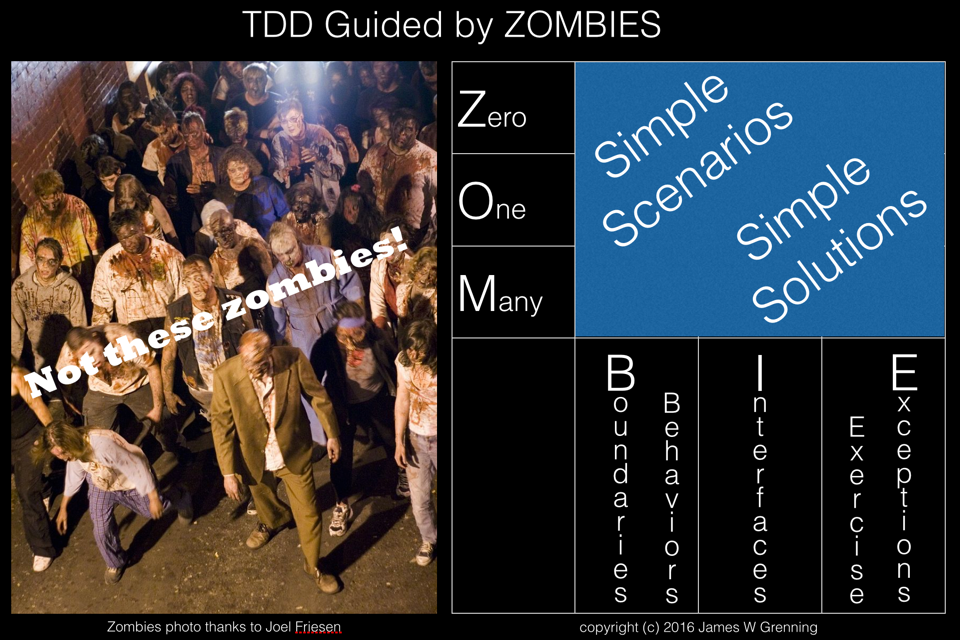
When I first used TDD I read James Grenning’s book Test Driven Development for Embedded C. In this book James proposed following a pattern for developing tests to test for zero, then one and then many (ZOM). Recently he has developed this idea further into ZOMBIE testing. Z – Zero O – One M – Many...
Category: Uncategorised
CODESYS for UniPi 1.0.2.0
CODESYS for UniPi 1.0.2.0 is available for download from the CODESYS store.Changes:Addition of support for digital inputs I13 and I14 using a custom cable. Enhanced support for one wire expansion modules giving better behaviour on comms or power failure to the module.
Using Google Test with CDT in eclipse
Introduction I like to use test driven development, currently my preferred framework is googletest. When I came to use eclipse CDT with the MinGW toolchain I found I had lots of little issues to get over to achieve what I wanted, namely a rapid TDD environment that I could also build from the command line...
A solution to Jenkins jobs conflicting over shared resources
I have been looking for a way to manage the execution of Jenkins jobs that require exclusive access to a resource other than the Jenkins slave it is being built on. Let's consider two scenarios that can cause problems.Shared Physical ResourceWorking with embedded systems I often want to run tests on an embedded device as...
Using the Camera with CODESYS on the Raspberry Pi
This post is a primer on how to get started with using the Camera in CODESYS on the Raspberry Pi. The content of the post is taken from a mix of the CODESYS documentation and from reverse engineering sample projects. Configuring the Raspberry Pi Plug the Camera in to the connector labelled CAMERA on the...
Installing Jenkins on Raspberry Pi
I want to get a CI system setup at home and decided to try getting Jenkins up and running on a Raspberry Pi 2. My starting point is the latest Rasbian distribution, I have fixed the IP address of this Raspberry PI at 192.168.0.34. NOTE: I initially tried just installing jenkins from Rasbian, with sudo...
Using PiFace Digital 2 with CODESYS
In this post I look at how to drive the PiFace Digital 2 card with CODESYS. The post is aimed at CODESYS beginners. The PiFace Digital 2 is provides 8 open collector digital outputs with LED indicators (two of which also drive changeover relays) and 8 digital inputs, four of the inputs are in parallel...
CODESYS with Edimax EW-7811UN on Raspberry PI
Up to this point I have been using wired ethernet, tonight I decided to try with a wireless adapter. First I followed the instructions here to get the Raspberry PI on my home network. https://www.raspberrypi.org/documentation/configuration/wireless/ Then I tried scanning for the device from CODESYS with no luck. I couldn’t ping the Raspberry PI from my PC,...
Getting started with CODESYS visualisation on the Raspberry Pi
This post is intended for those who have never generated any graphics using CODESYS. CODESYS has a built in fully integrated visualization system. I have started by creating a very simple new CODESYS program using ST as the programming language. Next step is to add a blank visualization as shown below I name the new...
Starting with CODESYS on the Raspberry Pi
NOTE THIS POST IS OUT OF DATE. Please see starting-with-codesys-on-raspberry-pi I’ve finally decided to give CODESYS a try on the Raspberry PI. This post tracks what I had to do to get CODESYS functioning, I’ll post more on sample projects in the future. First of all, my setup: I’m running a fresh install of Windows 8.1...